All Systems
Fire Protection System

Gas-Based Suppression Systems

Automatic suppression systems developed to bring a fire under control quickly and effectively in areas where water or foam is unsuitable.

In short: Gas-based (clean agent) suppression is a residue-free solution for critical rooms where water or foam is unsuitable, activating automatically through the fire detection system. FM-200 (HFC-227ea) is used in occupied spaces and CO₂ in unoccupied ones; aerosol systems protect compact volumes such as electrical panels without any piping.

Clean agents that leave no residueFull integration with fire detectionIntervention that does not harm critical equipmentStandard-compliant volume calculation
Gas-Based Suppression Systems
3 solution types
01 — Overview

About the system

Our engineering approach to this part of fire safety, and the details that matter.

Gas-based suppression systems are automatic suppression systems developed to bring a fire under control quickly and effectively in areas where water or foam is unsuitable. Preferred especially in rooms housing electronic equipment, critical production infrastructure and high-value assets, they put out the fire quickly while allowing safe intervention without damaging the protected equipment.

Working in integration with the fire detection system, gas-based suppression systems activate automatically once a fire is detected according to defined scenarios. The suppression gas is discharged into the protected volume in a controlled way through dedicated piping and nozzles, stopping the fire from growing. This significantly reduces the production losses, equipment damage and prolonged downtime a facility could suffer.

The most suitable suppression system is determined by the volume of the protected room, its intended use, fire load and applicable standards. Different gas-based suppression solutions can be applied in electrical rooms, transformer substations, server rooms, UPS rooms, archives, control rooms and similar critical areas.

02 — Solution Types

3 solutions, each for a specific need

Engineered system options selected by occupancy, hazard class and building architecture, backed by design calculations.

01

FM-200 Gas-Based Suppression Systems

The most widely chosen clean agent suppression solution for critical areas housing electronic equipment.

FM-200 gas-based suppression systems are among the most widely chosen clean agent suppression solutions for critical areas housing electronic equipment. The suppression gas brings the fire under control quickly, leaves no residue on electronic equipment and needs no cleanup after discharge.

FM-200 gas interrupts the chemical reaction of the fire, extinguishing the flames rapidly. Because discharge time is very short, it responds effectively without giving the fire a chance to grow. This makes it a safe choice for IT centers, server rooms, data centers, UPS rooms, telecommunications centers, archives, control rooms and other rooms with dense electronic equipment.

One of the biggest advantages of FM-200 systems is that they are suitable for occupied spaces. With correct design and standard-compliant installation, personnel safety is maintained and critical equipment is protected from fire damage.

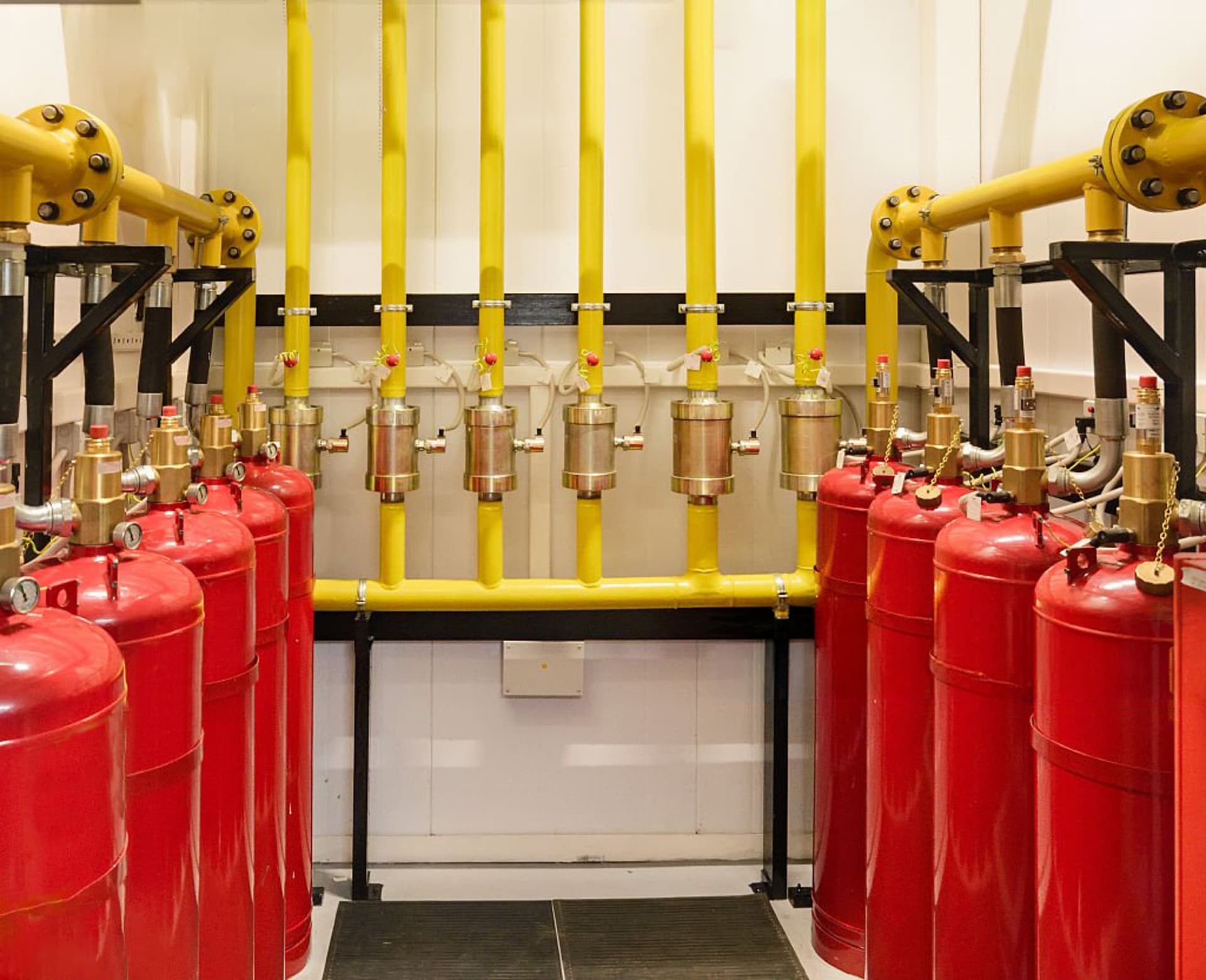
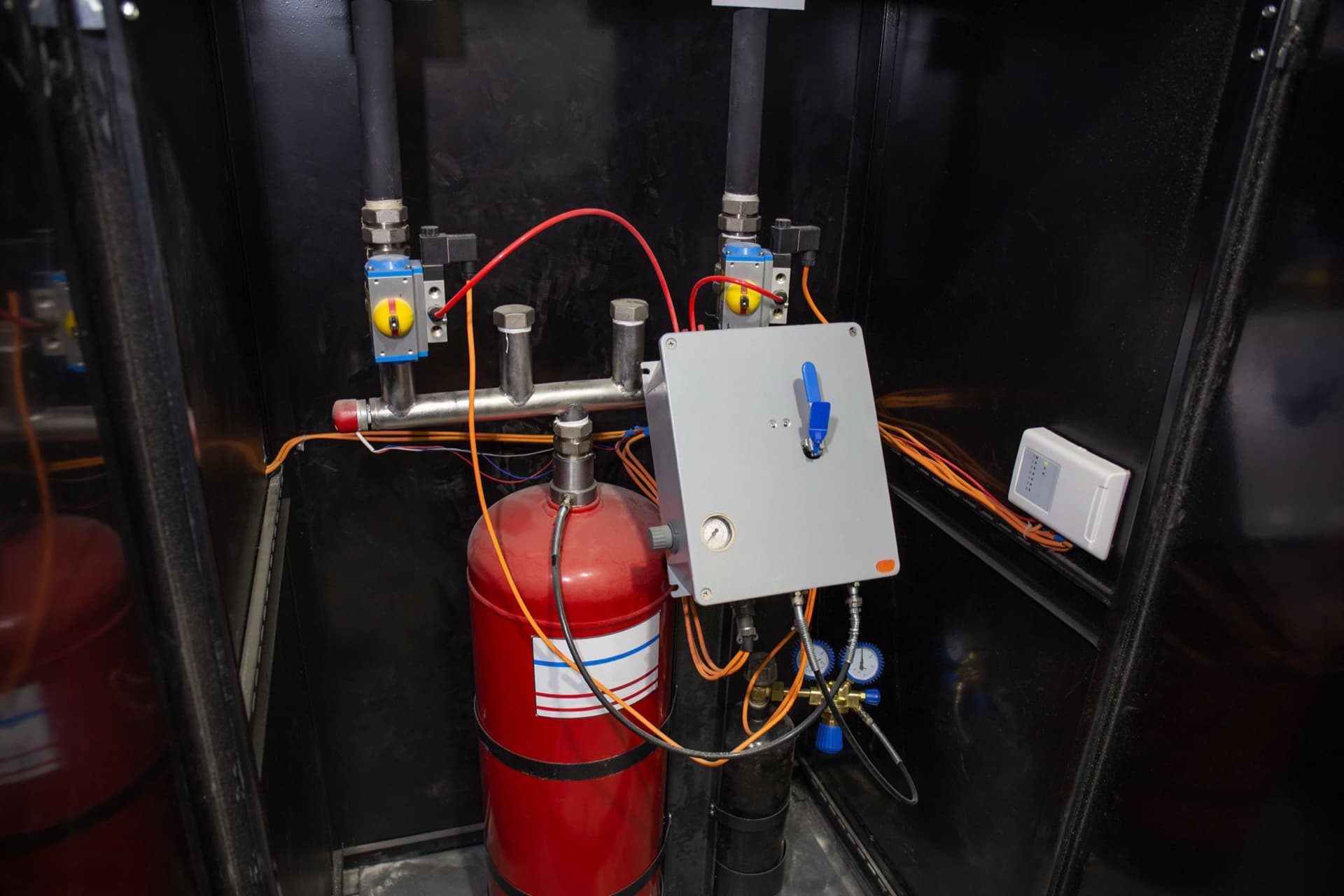
The system consists of gas cylinders, valve assemblies, piping network, discharge nozzles, detection system and control panel. All equipment is selected according to the project calculations and designed to national and international standards.
FM-200 Gas-Based Suppression Systems
Gas-Based Suppression Systems
02

CO₂ Gas-Based Suppression Systems

A reliable suppression solution for rooms with high fire risk where people are not continuously present.

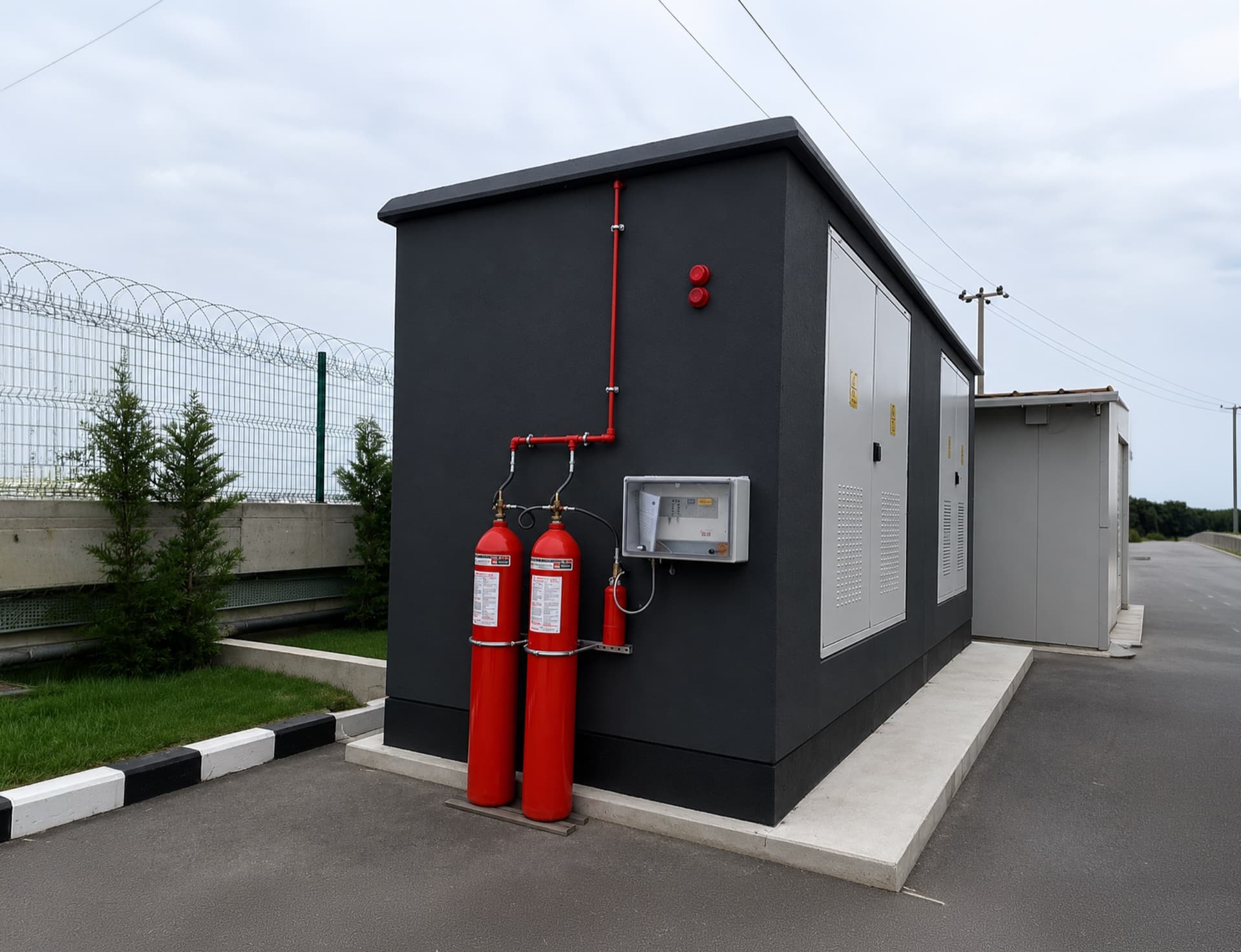
CO₂ gas-based suppression systems are effective suppression solutions preferred especially in rooms with high fire risk where people are not continuously present. Carbon dioxide lowers the oxygen level in the environment, stopping the combustion reaction and bringing the fire under control quickly.

Thanks to their high suppression performance, they are widely used in electrical transformer substations, generator rooms, turbine rooms, paint booths, industrial process areas and similar special rooms. They offer a reliable and economical solution where using water is undesirable.

Because CO₂ reduces the oxygen content of the space and can pose a risk to human health, these systems are not applied in spaces with continuous personnel presence. Detailed risk analyses are therefore carried out before installation, and the system is designed with audible-visual warnings, delayed discharge scenarios and emergency evacuation procedures.

A properly designed CO₂ suppression system provides fast response in critical industrial areas and contributes significantly to protecting equipment and supporting production continuity.

CO₂ Gas-Based Suppression Systems
Gas-Based Suppression Systems
03

Aerosol Suppression Systems

A compact, high-performance suppression solution that provides effective fire protection in confined volumes.

Aerosol suppression systems are compact, high-performance suppression solutions developed to provide effective fire protection in confined volumes. When the system activates, the suppression agent spreads through the space as fine particles, stopping the combustion chain reaction and bringing the fire under control quickly.

Thanks to their compact construction, they are widely chosen for inside panels, electrical panels, control cabinets, machine compartments, automation systems and similar small-volume applications. Because they need no piping, they integrate easily into existing systems and installation time is very short.

Aerosol suppression systems stand out for low maintenance needs and high operating reliability. They provide effective suppression in areas with live electrical power without harming equipment, helping protect a facility's critical infrastructure.

Designed around the characteristics of the protected volume, aerosol systems work in integration with fire detection systems and respond automatically at the earliest stage of a fire, helping minimize potential damage.

Aerosol Suppression Systems
Gas-Based Suppression Systems
Frequently Asked Questions

Gas-Based Suppression Systems: frequently asked questions

Where is gas-based suppression used?

Gas-based suppression is preferred in critical rooms holding electronic equipment or high-value assets, such as electrical rooms, transformer stations, server and data rooms, UPS rooms, archives and control rooms. Which gas is used depends on whether people are present in the room and on the sensitivity of the protected equipment.

What is the difference between FM-200 and CO₂ suppression systems?

FM-200 (HFC-227ea) extinguishes by interrupting the chemical reaction of the fire, leaves no residue and can be used safely in occupied spaces, so it is preferred in server rooms and data centers. CO₂ stops combustion by lowering the oxygen level; it is therefore not used where personnel are continuously present, but in unoccupied rooms such as transformer stations and generator rooms.

How often should a gas-based suppression system be maintained?

Cylinder pressure and weight checks, valve group function tests and detection sensor calibration should be done periodically, generally once a year. Because a drop in cylinder weight can indicate a gas leak, this value should also be monitored in quarterly visual checks.

Which standards are gas-based suppression systems designed to?

The gas quantity is calculated from the volume, purpose and fire load of the protected room; for CO₂ systems, either local application or total flooding is selected. For FM-200 systems, a short discharge time (on the order of seconds) is a standard requirement. The design is integrated with the detection system in line with national and international suppression standards.

Does an aerosol suppression system require piping?

No. Aerosol suppression systems work without piping; the unit is mounted directly inside the protected volume (for example a panel or control cabinet) and, when activated, releases the agent into the space as fine particles. This shortens installation time and makes integration with existing systems easy.

Facilities where we installed gas-based suppression systems

A selection of reference projects where we designed and commissioned this system.

Kilim MobilyaRavago

Let's map your facility's fire protection together.

Free site survey, hydraulic analysis and a fast quote. Our team can be on your site within 48 hours.