All Systems
Fire Protection System

Fire Pumps and Pump Sets

Fire pumps and fire pump sets: redundant pump groups of electric, diesel and jockey pumps, selected by hydraulic calculation.

In short: A fire pump supplies water to sprinkler, hydrant and fire hose cabinet lines at the calculated flow and pressure; on site it is usually called a fire pump set. A typical set has an electric main pump, a diesel backup pump and a pressure-maintaining jockey pump. Özaydın Yangın sizes capacity by hydraulic calculation for the facility's risk class.

Electric + diesel + jockey pump groupCapacity selected by hydraulic calculationSupply for sprinkler, fire hydrant and hose cabinet systemsDesign suited to pump room conditions
Fire Pumps and Pump Sets
4 solution types
01 — Overview

About the system

Our engineering approach to this part of fire safety, and the details that matter.

Fire pumps supply pressurized water to wet suppression systems and are rated by their nominal flow and nominal pressure. They are designed and selected to overcome system resistance during a fire and deliver the required pressure and flow at the pre-calculated water outlet points. Commonly called the "fire pump set" in the field, these pump groups are the center of the water supply for sprinkler, fire hydrant and fire hose cabinet systems.

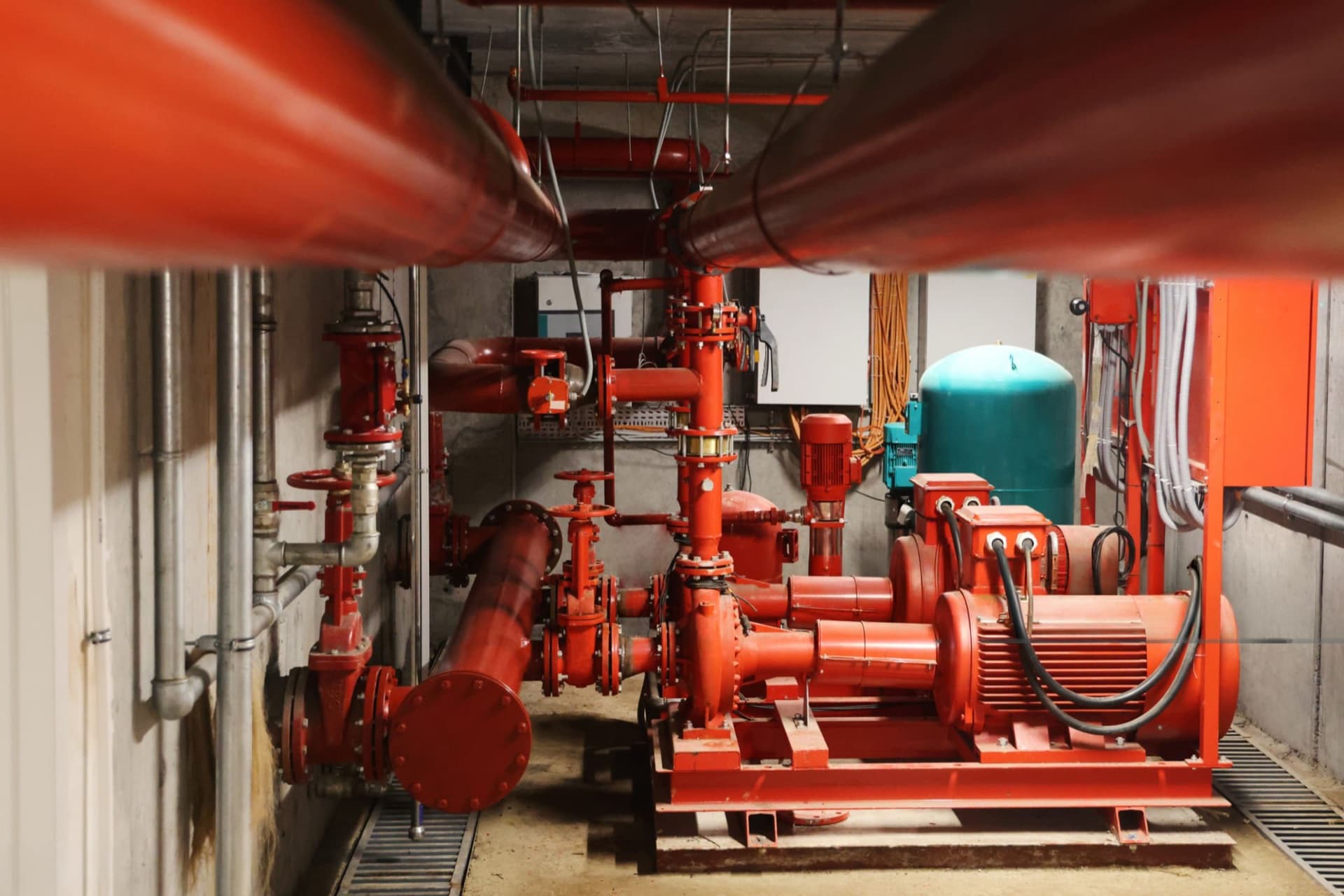
Fire pumps basically pressurize the sprinkler installation, the fire hydrant installation, fire hose cabinets and fire department inlet connections. A pump group usually consists of one electric pump, one diesel pump and one jockey pump. In a power outage, the diesel pump takes over so the system keeps running; the jockey pump compensates for small pressure drops in the piping and keeps the main pumps from starting unnecessarily.

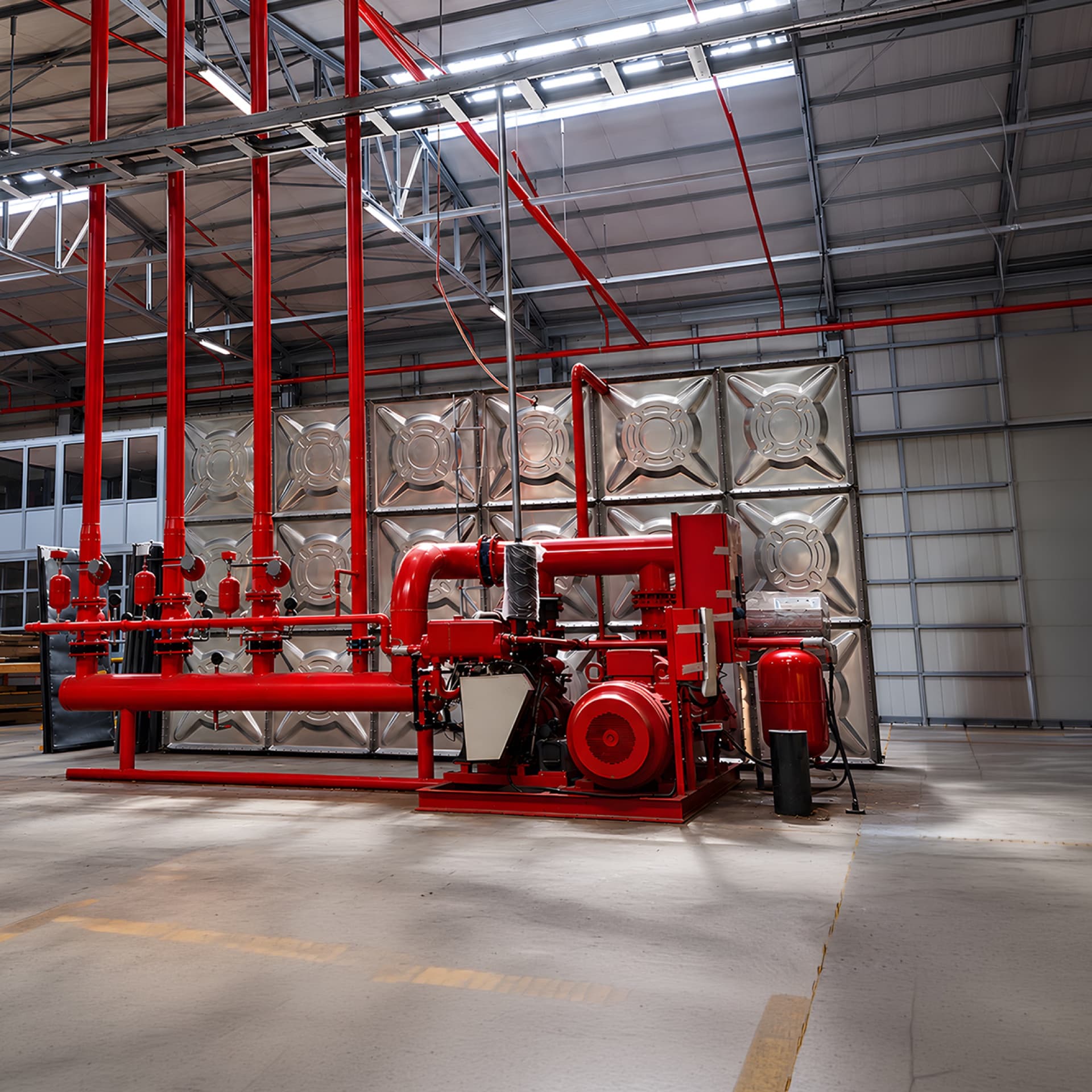
Pump capacity is determined by hydraulic calculation, taking into account the building's hazard class, the size of the protected area and the required flow and pressure. The pump group is treated as a single system together with the fire water tank and control equipment. For the broader picture of this whole, see the fire pump set and fire water tank sections on the Mechanical Systems page.

02 — Solution Types

4 solutions, each for a specific need

Engineered system options selected by occupancy, hazard class and building architecture, backed by design calculations.

01

Electric Motor-Driven Fire Pump

The primary electric motor-driven fire pump that provides main pressurization under normal operating conditions.

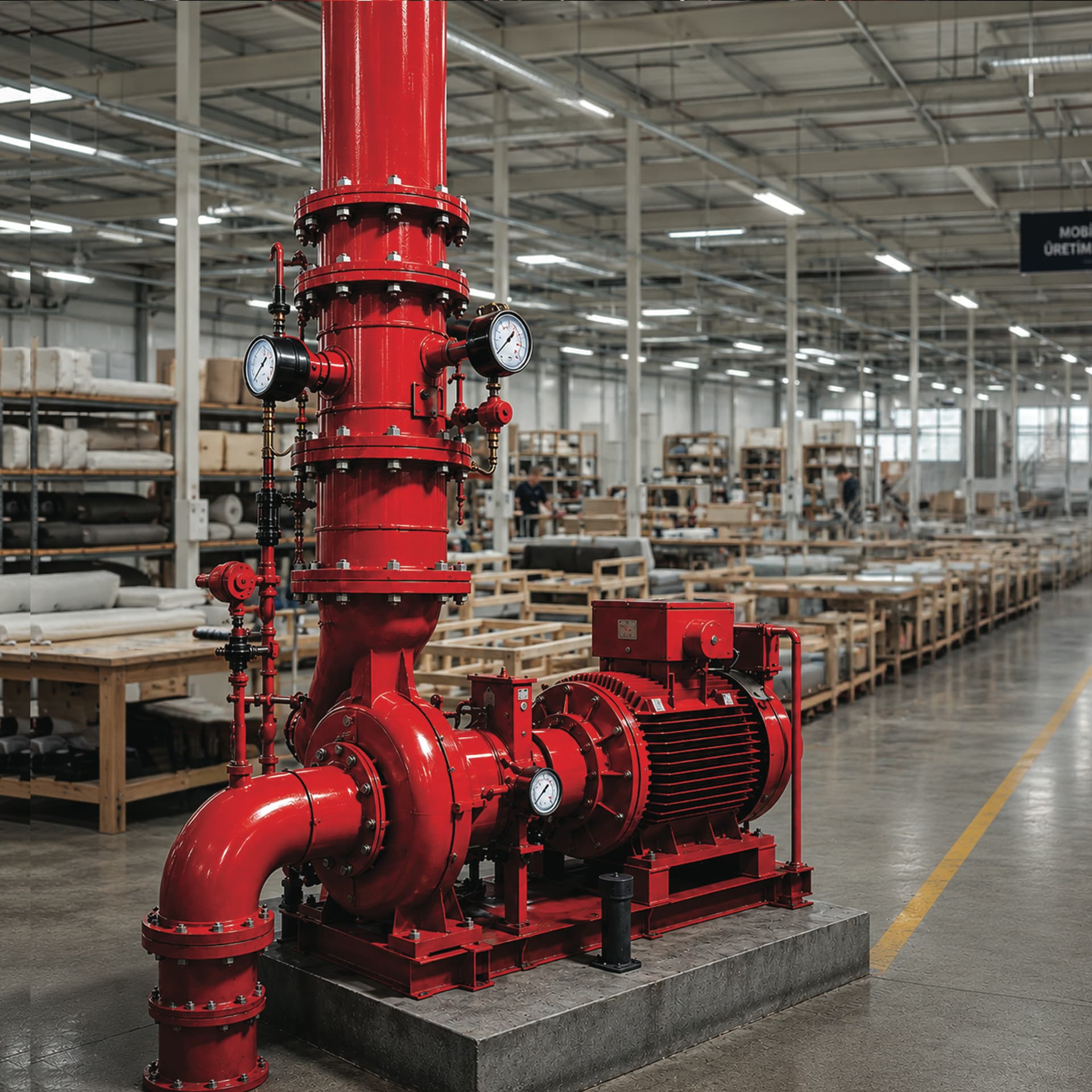
The electric motor-driven fire pump is the main water delivery element of the pump group. It starts when a pressure drop is detected in the system and supplies the flow and pressure that sprinklers, fire hydrants and fire hose cabinets need.

Where two electric pumps of the same capacity are used, one is treated as the duty pump and the other as the standby. In systems with two electric pumps and one jockey pump, a generator capable of supplying at least 3 times the pump capacity (kW) in energy is required.
Electric Motor-Driven Fire Pump
Fire Pumps and Pump Sets

02

Diesel Engine-Driven Backup Pump

A diesel engine-driven fire pump, independent of electrical power, that keeps the system running during a power outage.

The diesel engine-driven fire pump is added to the pump group to keep the system supplied with water when mains power is lost or the electric pump is out of service. Because it does not depend on electrical power, it is one of the most critical layers of redundancy in a fire.

If the facility has no generator, pump packages of one electric, one diesel and one jockey pump must be used. Control and starting equipment for the diesel pump is designed together with the pump group.

Diesel Engine-Driven Backup Pump
Fire Pumps and Pump Sets
03

Jockey Pump

A small-capacity pump that compensates for minor pressure drops in the piping and keeps the main pumps from running unnecessarily.

The jockey pump is a low-flow auxiliary pump that keeps the fire installation under constant pressure. It covers pressure drops caused by small leaks or temperature changes, so the main pumps start only on a real demand for water.

This operating arrangement reduces frequent start-stop cycling of the main pumps and helps keep the system ready for use at all times.

Jockey Pump
Fire Pumps and Pump Sets
04

Pump Room and Operating Conditions

The temperature and infrastructure conditions that must be maintained in the pump room at all times for the pump group to operate reliably.

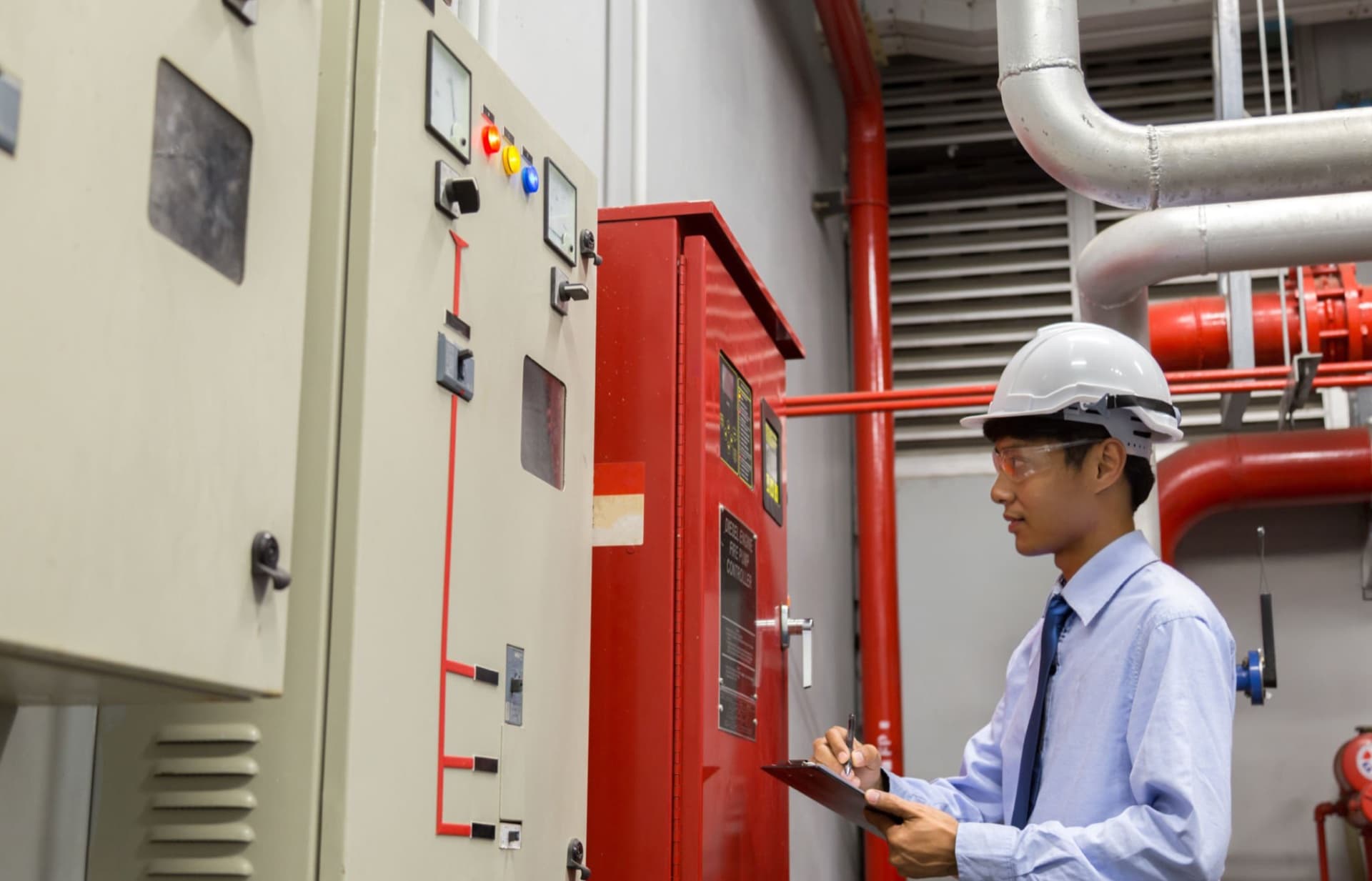
In the pump room or pump station, a temperature of 4 °C for electric motor-driven pumps and 10 °C for diesel engine-driven pumps must be maintained at all times (BYKHY (Turkish Fire Protection Regulation), Article 93-9).

The pump room layout, ventilation, valve and manifold arrangement and suction connections to the water tank are designed together with the pump group. Periodic testing and maintenance are the basic condition for keeping the pump group ready to run at any moment.

Pump Room and Operating Conditions
Fire Pumps and Pump Sets
Frequently Asked Questions

Fire Pumps and Pump Sets: frequently asked questions

Why does a fire pump set include a diesel pump?

The diesel pump is added to keep water supply going when mains power is lost or the electric pump is out of service. Because it does not depend on electricity, it forms one of the most critical backup layers in a fire. If the facility has no generator, a package of one electric, one diesel and one jockey pump is required.

What does the jockey pump do?

The jockey pump is a low-flow auxiliary pump that keeps the fire system under constant pressure, compensating for pressure drops from small leaks or temperature changes. The main pumps therefore start only on a real water demand, do not short-cycle, and the system stays ready for use at all times.

What determines the cost of a fire pump?

Cost depends on the required flow and pressure (set by hydraulic calculation from the building's risk class and protected area), the pump set configuration (electric + diesel + jockey, or two electric + generator), whether a pump room already exists, and brand-dependent certification (such as FM or UL).

What conditions must a fire pump room meet?

Under BYKHY (Turkish Fire Protection Regulation) Article 93-9, the ambient temperature must be kept continuously at no less than 4 °C for electric motor pumps and no less than 10 °C for diesel motor pumps. Pump room ventilation, valve and manifold arrangement, and suction connections to the water tank are designed together with the pump set.

What is the generator requirement for systems with two electric pumps?

In systems with two electric pumps, one duty and one standby, connected to a generator, the generator must be able to supply at least three times the pump capacity (kW). This requirement ensures both pumps can run when needed even during a power outage.

Facilities where we installed fire pumps and pump sets

A selection of reference projects where we designed and commissioned this system.

BakmaksanErten İplikÖzreelsKayplasMizanlar MobilyaCennet YataklarıOkandan CamGencallar AyakkabıTuğsan SüngerAvensisGMMKoltaba

Let's map your facility's fire protection together.

Free site survey, hydraulic analysis and a fast quote. Our team can be on your site within 48 hours.