All Systems
Fire Protection System

Mechanical Systems

Delivers the water needed in a fire at the right pressure and flow, keeping sprinkler, fire hydrant and fire hose cabinet systems working effectively.

In short: Mechanical systems consist of the fire pump set and fire water tank, which supply the water that suppression lines need at the right pressure and flow. Reliable operation of sprinkler, hydrant and fire hose cabinet systems depends on this infrastructure. Özaydın Yangın sizes the pump set and tank capacity by hydraulic calculation according to the facility's risk class.

Design based on hydraulic calculationsElectric + diesel backup pump setModular water tank solutionsExpert commissioning process
Mechanical Systems
2 solution types
01 — Overview

About the system

Our engineering approach to this part of fire safety, and the details that matter.

For fire suppression systems to work reliably and without interruption, they depend on properly designed mechanical infrastructure. Mechanical systems deliver the water needed in a fire at the right pressure and flow, allowing sprinkler systems, fire hydrant systems, fire hose cabinets and other suppression systems to work effectively.

Mechanical solutions of different capacity and specification are planned for each building according to its fire risk, intended use, architectural features and applicable standards. Based on the hydraulic calculations, the fire pump set, water tank and mechanical equipment are specified for the project. This reliably provides the required water volume and operating pressure at every point in the system, and builds a fire safety infrastructure that runs trouble-free for many years.

Correct engineering of mechanical systems affects not only performance in a fire but also the system's service life, ease of maintenance and energy efficiency. It is therefore essential that design, installation and commissioning are carried out with an expert engineering approach.

02 — Solution Types

2 solutions, each for a specific need

Engineered system options selected by occupancy, hazard class and building architecture, backed by design calculations.

01

Fire Pump Set

The most important component of the mechanical system, supplying the water that suppression systems need at the required pressure and flow.

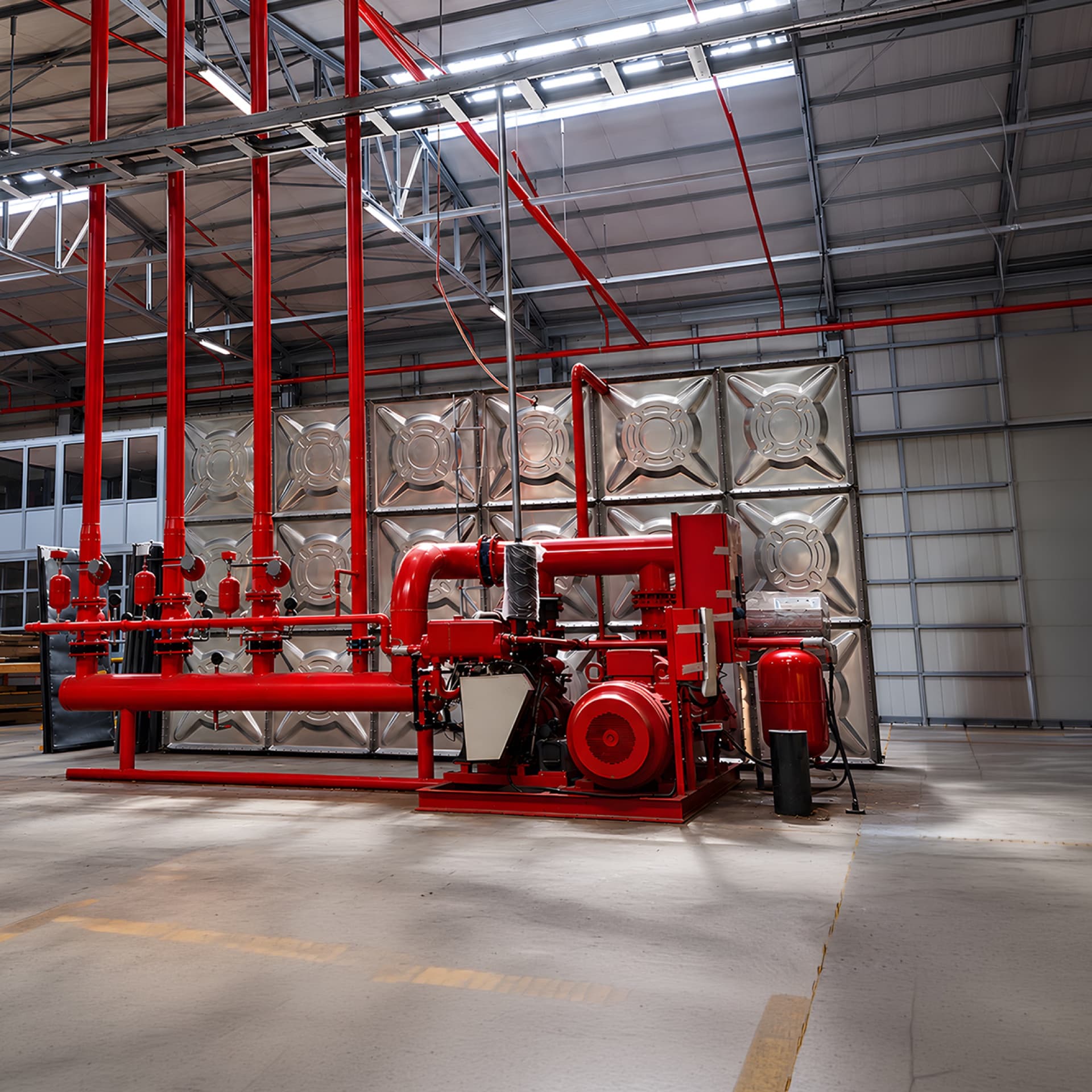
The fire pump set is the most important component of the mechanical system, supplying the water that fire suppression systems need at the required pressure and flow. It starts automatically in a fire, allowing sprinkler systems, fire hydrant lines and fire hose cabinets to work reliably.

Fire pump sets are designed as pump groups consisting of an electric motor-driven main pump, a diesel motor-driven backup pump and a jockey pump that maintains pressure balance. In extraordinary conditions such as a power outage, the diesel fire pump takes over so the system keeps running and fire safety stays continuous. The jockey pump compensates for small pressure drops in the piping, preventing the main pumps from starting unnecessarily and keeping the system ready at all times.

Pump capacity is determined by hydraulic calculation, taking into account the building's hazard class, the size of the protected area and the required flow and pressure. A fire pump set selected at the right capacity and installed to standard starts within seconds in an emergency and supports uninterrupted operation of the suppression systems.

Regular periodic testing and maintenance are among the most important factors in keeping the fire pump set ready to run at any moment. This way the system delivers reliable performance for years and protects the facility's fire safety infrastructure.
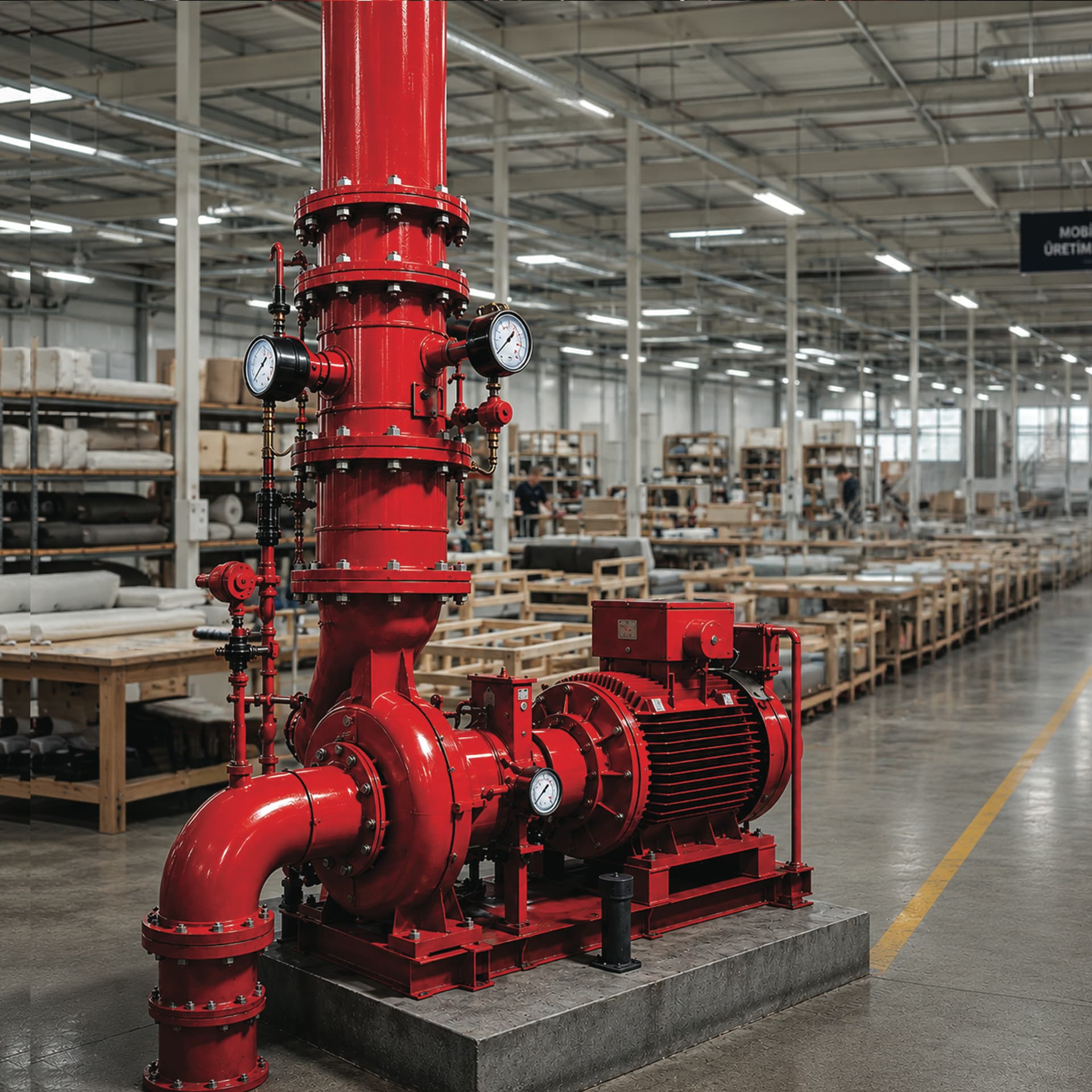
Fire Pump Set
Mechanical Systems
02

Fire Water Tank

The core component that safely holds the water reserve suppression systems need and guarantees an uninterrupted water supply in a fire.

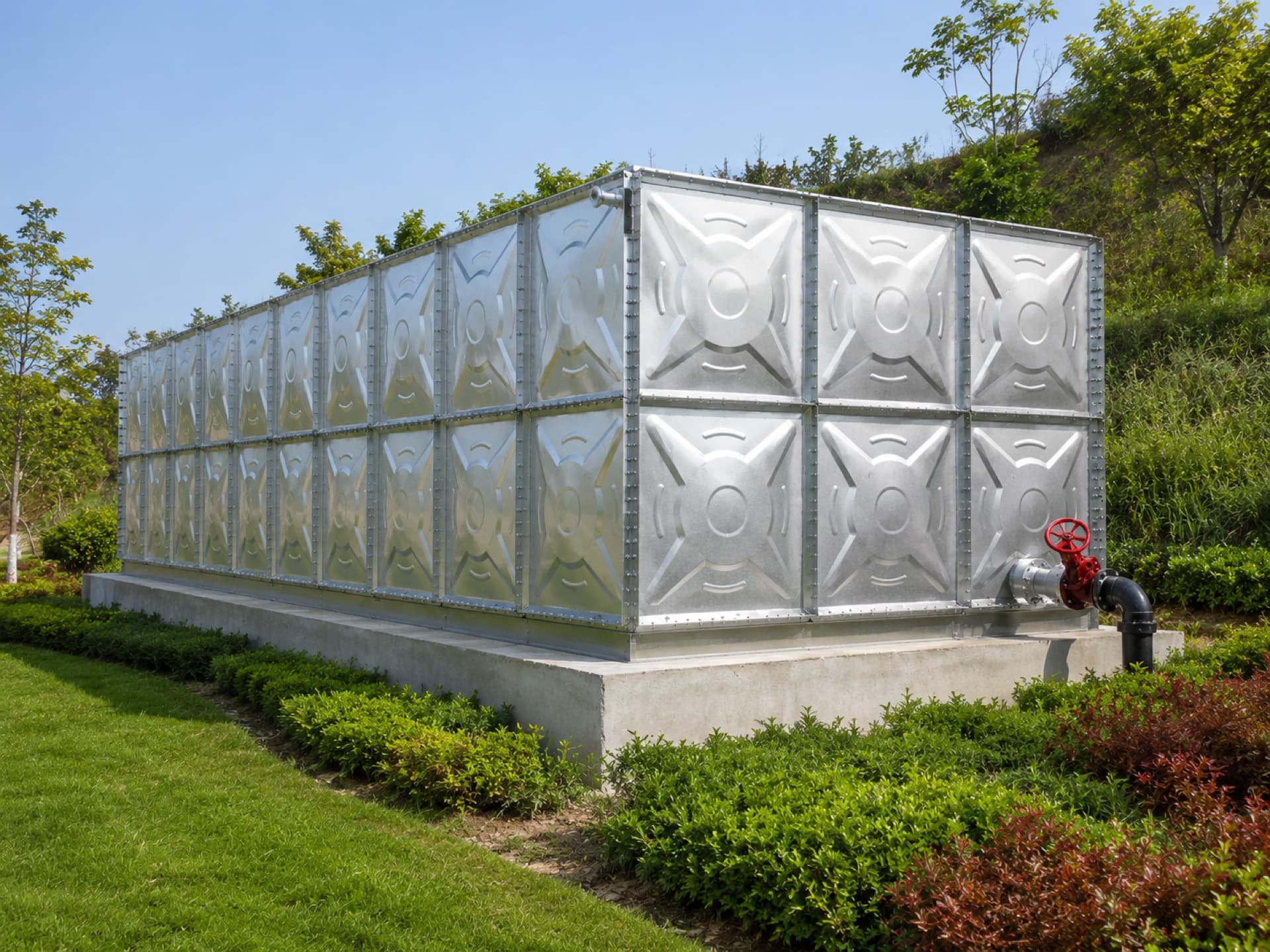
The fire water tank is one of the core mechanical systems, safely holding the water reserve suppression systems need and guaranteeing an uninterrupted water supply in a fire. It lets the system keep operating even in adverse situations such as pressure drops or outages in the mains supply.

Tank volume is determined by engineering calculations based on the building's intended use, fire load, hazard class and applicable standards. This ensures that enough water is delivered to the system without interruption for the required duration in a fire.

Fire water tanks can be built in modular galvanized steel, stainless steel (chrome) or other materials depending on project needs. Thanks to their modular construction, they can be installed in dimensions that fit the available space and expanded later by adding modules when capacity needs to grow.

Tanks are designed to work in integration with the fire pump set and are kept permanently ready for use by automatic control equipment. Water level monitoring, properly designed suction lines and standard-compliant mechanical connections keep the system reliable for many years.

A fire water tank selected at the right capacity and professionally installed secures the water source that fire suppression systems depend on and plays a critical role in a facility's active fire safety.

Fire Water Tank
Mechanical Systems
Frequently Asked Questions

Mechanical Systems: frequently asked questions

Which facilities are required to have a fire pump set?

Any facility with a sprinkler, hydrant or fire hose cabinet system needs a fire pump set, because mains water pressure is not sufficient. The requirement arises not for the pump itself but for the suppression systems it feeds, under the thresholds in BYKHY (Turkish Fire Protection Regulation). A pump set made up of an electric pump, a diesel pump and a jockey pump meets the redundancy that the regulation requires.

What determines the cost of a fire pump set and water tank?

Cost depends on the required flow and pressure (set by the facility's risk class and protected area), the pump set configuration (electric + diesel + jockey, or two electric + generator), tank material (galvanized, stainless steel or GRP composite) and tank volume. For modular tanks, unit cost can change as capacity grows. The exact amount is settled by the hydraulic calculation report.

How often should a fire pump set be maintained?

The pump set needs a monthly visual check, a quarterly flow-pressure test and a full performance verification once a year. Diesel pump battery, fuel and engine checks are a separate maintenance item, and start-up time on power failure should be tested. The jockey pump's start-stop frequency should also be monitored so small leaks are caught early.

Which standards are fire pump sets designed to?

Pump capacity is set by hydraulic calculation from the building's risk class and the flow-pressure demand of the systems it feeds (sprinkler, hydrant, fire hose cabinet); NFPA 20 is the reference standard for stationary fire pumps. BYKHY (Turkish Fire Protection Regulation) Article 93-9 requires the pump room to be kept continuously at 4 °C for electric pumps and 10 °C for diesel pumps. In facilities with two electric pumps, a generator rated at no less than three times the pump power is required.

How is fire water tank capacity determined?

Tank volume is set by hydraulic calculation from the building's purpose, fire load, risk class and the minimum discharge duration the fed systems require; this calculation is project-specific and cannot be given as one fixed figure. Modular tanks can be made of galvanized steel, stainless steel or GRP composite, and can be expanded with extra modules if capacity needs to grow later.

Facilities where we installed mechanical systems

A selection of reference projects where we designed and commissioned this system.

Cennet YataklarıArkopaBabiteBaykan MobilyaBemfil MensucatBintaşBrango Çelik KapıÖzreelsÇinkomDr DizaynAksu AhşapKayplas

Let's map your facility's fire protection together.

Free site survey, hydraulic analysis and a fast quote. Our team can be on your site within 48 hours.