All Systems
Fire Protection System

Fire Detection and Alarm Systems

Active fire safety systems that detect a fire at the incipient stage and play a critical role in protecting life and property.

In short: A fire detection and alarm system detects smoke, heat, flame or sparks at an early stage, signals the fire alarm panel, and triggers audible and visual warnings across the building. It can be installed as an addressable or conventional system. Özaydın Yangın designs detector layout according to the building plan, occupancy class and existing automation infrastructure.

Addressable or conventional solutionBuilding automation integrationAudible + visual warning networkAutomated announcement scenarios
Fire Detection and Alarm Systems
3 solution types
01 — Overview

About the system

Our engineering approach to this part of fire safety, and the details that matter.

Fire detection and alarm systems are active fire safety systems that detect a fire at the incipient stage and play a critical role in protecting life and property. Detecting a fire early allows evacuation to start in time, suppression systems to be activated and emergency crews to be directed quickly.

Today, fire detection systems are an important part of the mandatory safety infrastructure in many buildings, from industrial facilities to shopping centers, hotels, hospitals, schools and office buildings. Designed around the building's intended use, hazard class, architecture and applicable regulations, these systems identify potential fire risks as quickly as possible and support safe evacuation and fast response.

Fire detection and alarm systems form an integrated structure consisting of a fire alarm control panel, smoke and heat detectors, flame and spark detectors, manual call points, sirens, strobes, emergency voice announcement systems and other auxiliary equipment. Addressable or conventional systems are selected as needed to create the best solution for the building.

02 — Solution Types

3 solutions, each for a specific need

Engineered system options selected by occupancy, hazard class and building architecture, backed by design calculations.

01

Smoke and Heat Detection Systems

The most common fire detection solution, picking up the first signs of a fire and triggering the alarm system.

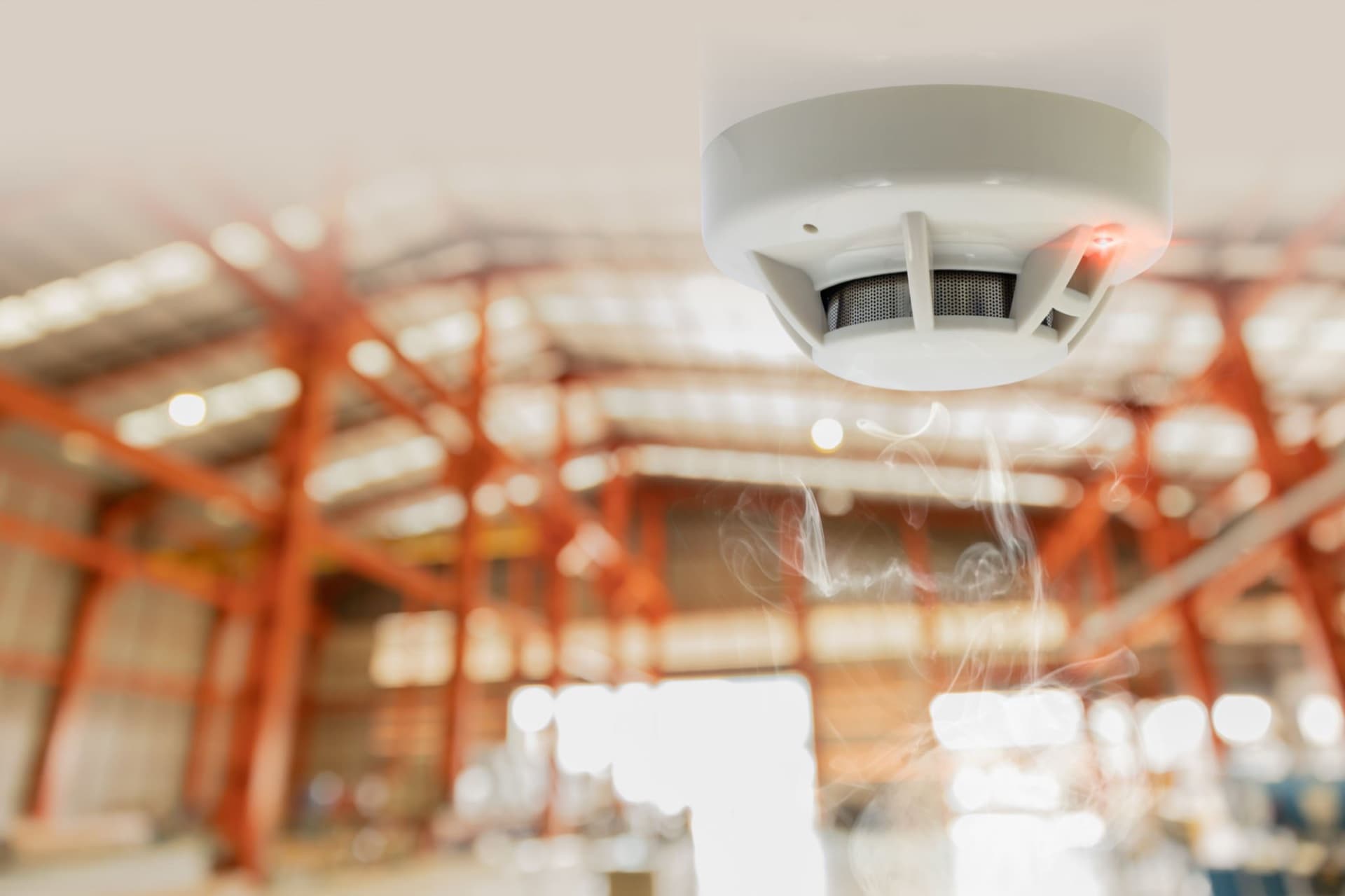
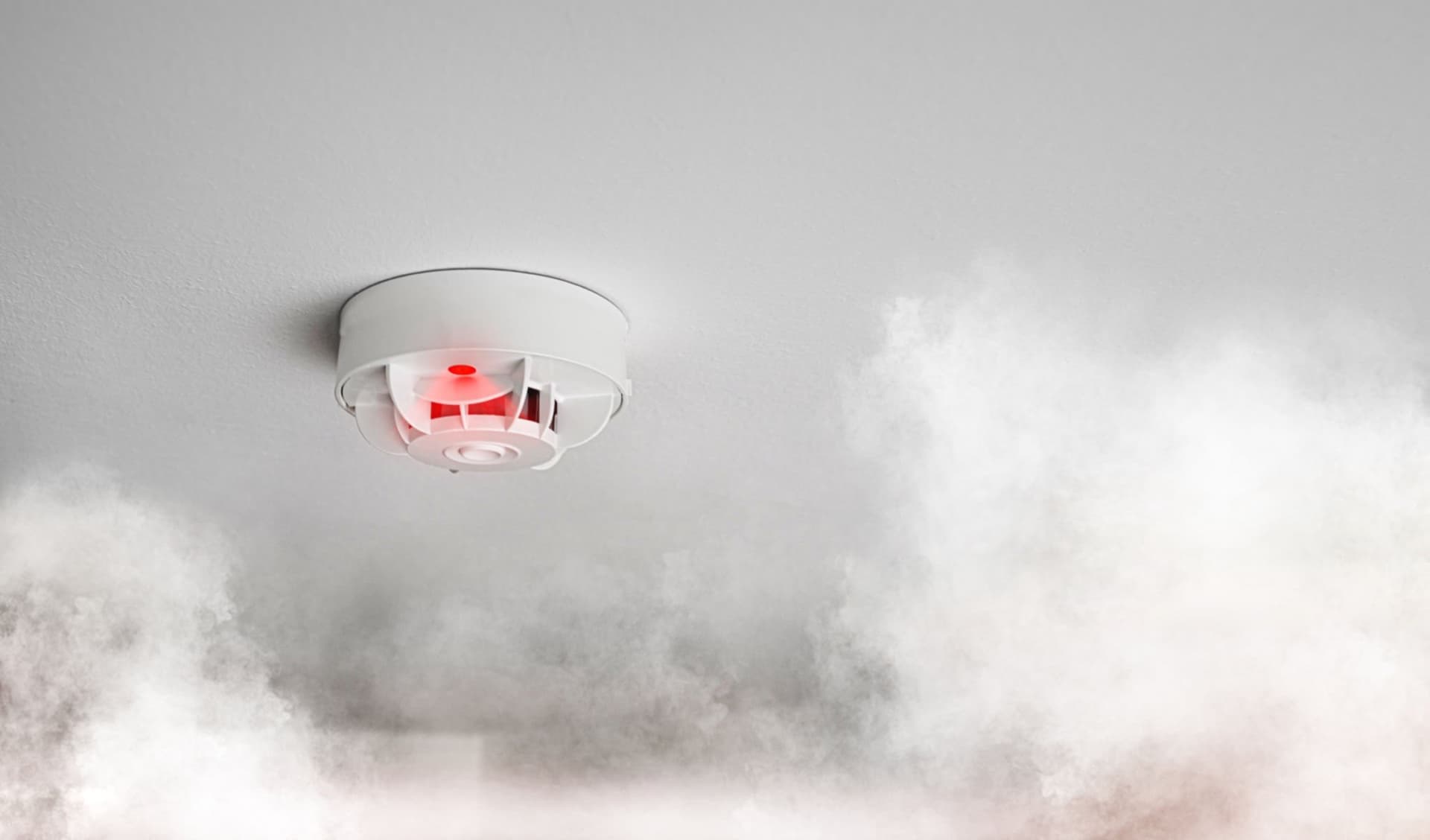
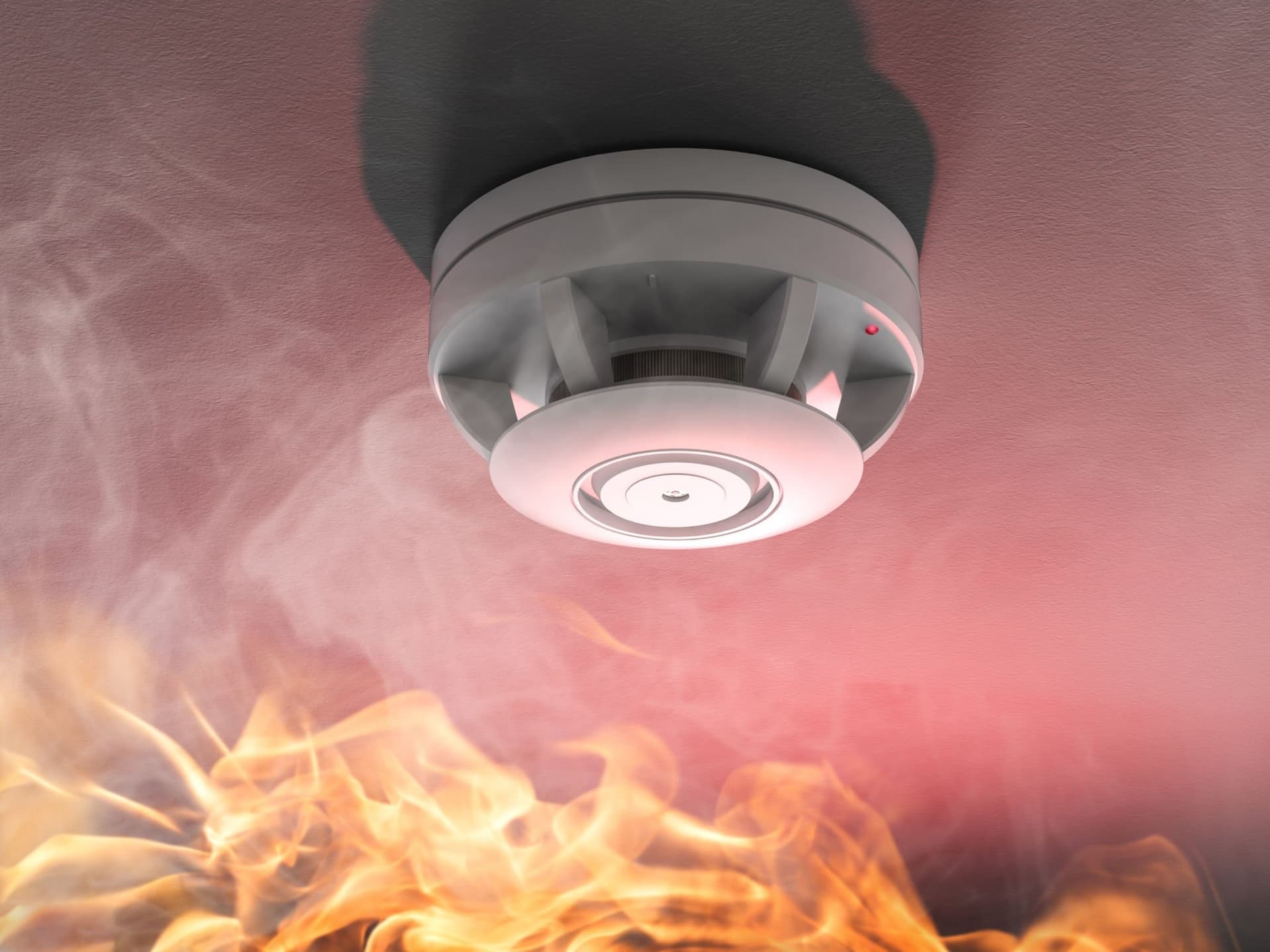
Smoke and heat detection systems are the most common fire detection solution, picking up the first signs of a fire and triggering the alarm system. Detectors continuously monitor smoke density and temperature rise in the environment and send a signal to the fire alarm panel when set thresholds are reached.

Depending on the area of use, optical smoke detectors, heat detectors, combined detectors and special-purpose detectors can be specified. This provides reliable detection suited to ambient conditions in production areas, warehouses, offices, hotels, hospitals, educational buildings and similar structures.

With a properly designed detector layout, a fire is detected before it grows and evacuation and response start in time. Early warning helps protect life and significantly reduces the property loss a fire can cause.
Smoke and Heat Detection Systems
Fire Detection and Alarm Systems
02

Flame and Spark Detection Systems

Specialized detection technology that raises an alarm within seconds in high-risk production areas.

Flame and spark detection systems are specialized detection solutions developed to detect fires very quickly in high-risk production areas. Without waiting for smoke to form, they detect the ultraviolet (UV) and infrared (IR) radiation emitted by a flame, or sparks, and can raise an alarm within seconds.

They perform especially well in paint shops, chemical production areas, energy facilities, fuel storage yards, woodworking plants, filter systems and facilities where flammable or combustible materials are present. In environments where a fire can develop extremely fast, early detection helps prevent potentially major losses.

As needed, they can be designed to work in integration with gas-based suppression systems, sprinkler systems or other automation infrastructure, so that automatic fire response scenarios are triggered reliably.

Flame and Spark Detection Systems
Fire Detection and Alarm Systems
03

Alarm and Emergency Announcement Systems

Informs building occupants accurately so that evacuation proceeds in a controlled way.

Once a fire is detected, informing occupants correctly and guiding them safely is one of the most important stages of effective fire safety. Alarm and emergency announcement systems carry alarm signals across the building audibly and visually, helping evacuation proceed in a controlled way.

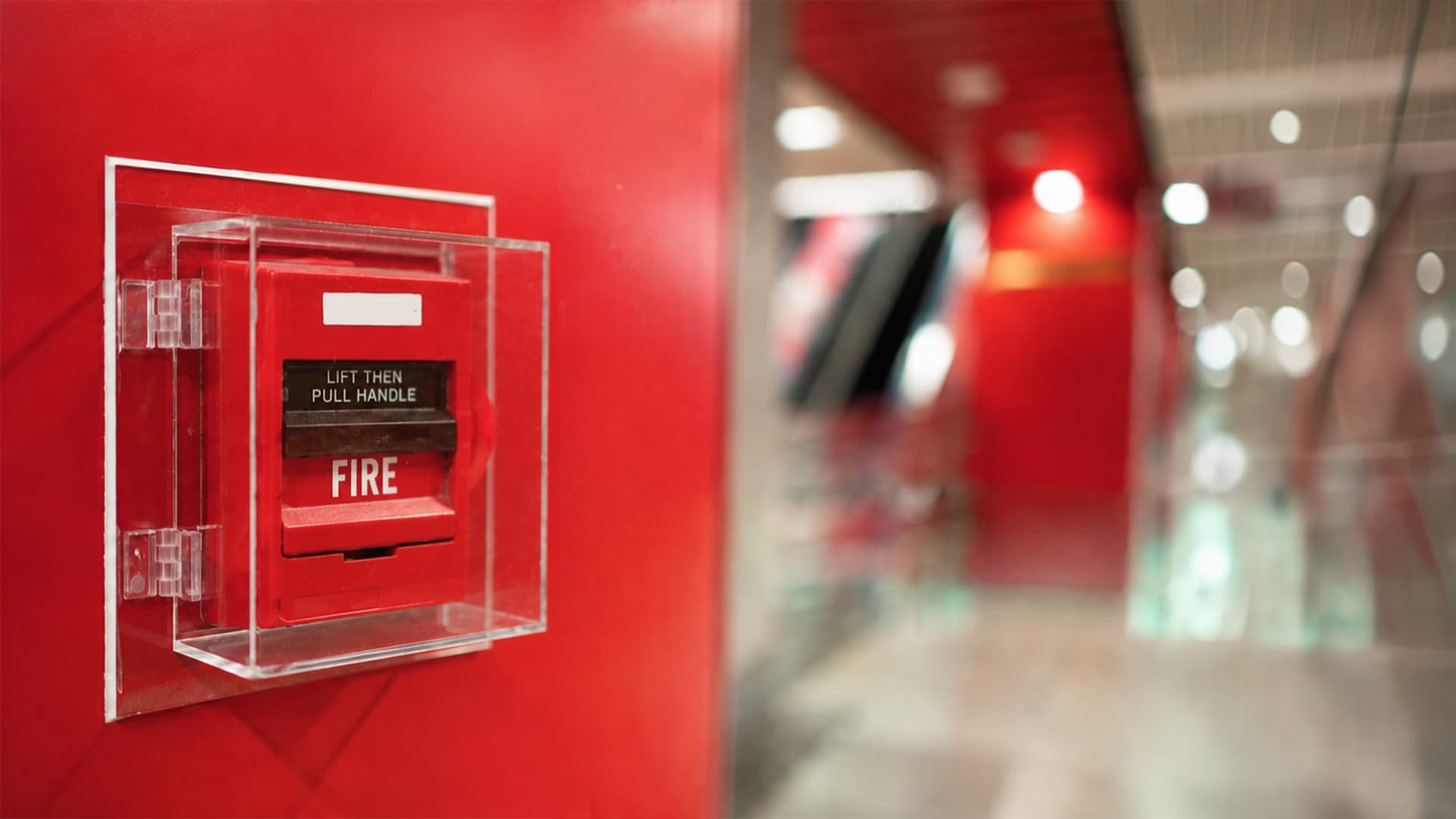
Within the system, manual call points, electronic sirens, strobes, audible warning devices and emergency announcement equipment work together. Announcements prepared for emergency scenarios inform occupants of the correct escape routes, aiming to reduce panic.

Alarm systems work in full integration with fire detection panels and can also communicate with elevator control, smoke exhaust systems, automatic doors, gas-based suppression systems and building automation infrastructure. In a fire, all safety systems are activated simultaneously, providing fast, controlled and safe emergency management.

Alarm and Emergency Announcement Systems
Fire Detection and Alarm Systems
Frequently Asked Questions

Fire Detection and Alarm Systems: frequently asked questions

Which buildings are required to have fire detection and alarm?

Depending on occupancy class and the thresholds in BYKHY (Turkish Fire Protection Regulation), fire detection and alarm is part of the required safety infrastructure in most industrial facilities, shopping centers, hotels, hospitals, educational institutions and office buildings. The exact scope is set at the design stage based on building height, occupant capacity and risk class.

What determines the cost of a fire detection and alarm system?

Cost depends on the number and type of detectors (smoke, heat, flame/spark or beam), whether the system is addressable or conventional, panel capacity, cable length, and the extent of the announcement and siren lines. In high-risk production areas, UV/IR flame detectors raise cost compared with standard smoke detectors. The exact price comes from the design prepared on the building plan.

How often should a fire detection and alarm system be maintained?

We recommend a monthly visual check of detectors, periodic functional tests of the panel and batteries, and a full system verification once a year. In environments prone to dust, steam or process contamination, detector cleaning and calibration should be more frequent. Regular maintenance reduces false alarms while keeping the system reliable in a real fire.

Which standards are fire detection and alarm systems designed to?

The EN 54 series (for example EN 54-12 for beam detectors) and NFPA 72 fire alarm and signaling principles are the references. The system is designed in line with the relevant articles of BYKHY (Turkish Fire Protection Regulation), and an addressable or conventional architecture is chosen according to building size.

What is the difference between addressable and conventional detection systems?

In an addressable system each detector has its own identity, so the panel shows the exact location of an alarm in the building; it is preferred for large, complex campuses. In a conventional system detectors are grouped by zone and the panel shows only the zone, which is a more economical solution for small and mid-sized buildings. The choice depends on building size and the priority placed on response speed.

Facilities where we installed fire detection and alarm systems

A selection of reference projects where we designed and commissioned this system.

KayplasMotif TekstilUMT AhşapArkopaBabiteBemfil MensucatBrango Çelik KapıBaşyazıcıoğlu Bamen TekstilSavaş Mobilya EvdemoKoltabaGazioğlu AmbalajCeylan Madeni Yağlar

Let's map your facility's fire protection together.

Free site survey, hydraulic analysis and a fast quote. Our team can be on your site within 48 hours.